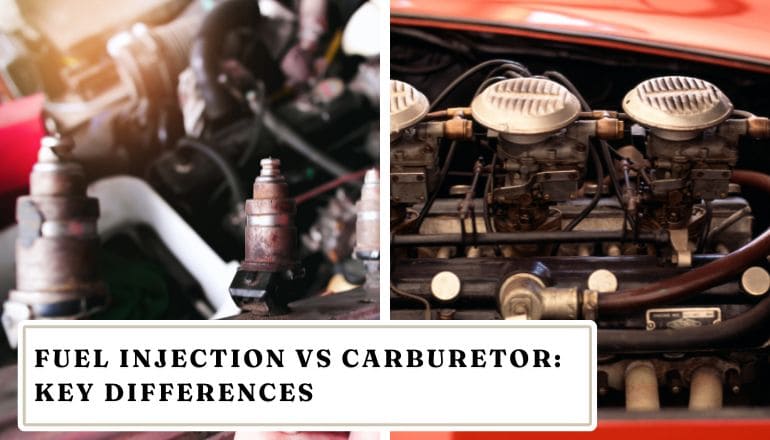
The discussion of carburetor vs fuel injection remains significant. Ever since the creation of the internal combustion engine, getting air and fuel into the combustion chamber has been a problem. Previous engines used a rudimentary fuel drip system, which worked but wasted a lot of the precious fuel which made this kind of vehicle very inefficient. This is why, as technology advanced, engineers looked to transfer fuel more efficiently and created the two primary systems of fuel delivery: fuel injection vs carburetor.
This blog post is going to simplify the differences between these two systems so you can make an informed decision.
Understanding Carburetors
Simply, a carburetor is a mechanical device mixing air and fuel before the gas enters the engine combustion chamber. The system does this through the Venturi effect, which is where air flowing through a narrow passage creates a vacuum and pulls in fuel with it. Carburetors, although they were simple and only a small part of the progression in engine technology.
How Does a Carburetor Work?
A carburetor utilizes a Venturi tube that is decreased in measurements at one time causing an area of low pressure. Fuel is sucked through a small jet and then mixed with the air. Choke and Throttle: The air-fuel ratio can be adjusted using two valves which are the choke and throttle.
Choke – The choke is a valve that limits the amount of air allowed into the engine, which fattens up the fuel mixture. This helps mostly at cold starts when a richer fuel mixture is needed to ignite the engine.
Throttle – The throttle is like a valve called the butterfly, that determines how much air-fuel mixture can pass into the engine. The more open the throttle, the amount of fuel delivered increases and aids the engine in gaining speed.
Stoichiometric Mixture
When both the fuel and the oxygen burn at the highest efficiency, we can call it the stoichiometric mixture. The general vicinity of this ratio is a 14.7:1 air-to-fuel ratio throughout most instances. They do this with precisely calibrated jets in carburetors to get the right mixture and therefore, better performance and efficiency.
Carburetor Design: Float-Feed Chamber
The carb has a float-feed chamber, which is just a little tray of gas that makes sure there’s gasoline to the engine all the time. A float will move a valve to reset the chamber with more fuel drops from the tank. Despite seeming rudimentary, it is an effective system that allows fuel to be delivered to the engine under varied conditions.
Understanding Fuel Injection
Herbert Akroyd was the first firm to develop the fuel injection. They advanced a structure that utilized a jerk hump to pressurize the fuel, which was updated and implemented by both Bosch and Cummins to use in diesel engines.
How Does a Fuel Injection Work?
Fuel injection is a method whereby fuel gets directly injected inside the combustion chamber or intake manifold of the engine. This happens in a really measured and highly regulated way. Here’s how it all works:
Fuel Pump: Suction from the tank created by the fuel pump sucks the fuel through the fuel line right up to the fuel injectors at high pressure.
Fuel Injectors: These are very small nozzles, which are controlled by the car’s engine control unit. They spray a fine mist of fuel into either an intake manifold or straight into the combustion chamber, depending on whether port or direct injection is used.
Sensors and ECU: The information gathered from oxygen sensors, throttle position sensors, and engine temperature sensors is fed to the ECU in a vehicle, which judges the exact amount of fuel that would be required. The ECU always adjusts the fuel injection timing and the amount sprayed to ensure an optimum air-fuel mixture for efficient combustion.
Intake: Combustion air reaches the engine after mixing fuel with the combustion chamber or manifold with the help of an intake.
Combustion: If air is finally combined with the correct amount of fuel, the mixture will contain combustion and be ignited through the engine’s spark plug, which gives power to the engine.
Fuel injection vs Carburetor: An Analysis of Differences
1. Versatility
For more than a century, carburetors were the most common means of getting fuel into those engines, replaced last decade by fuel injection in all passenger cars and trucks. Carburetors, however, have one fundamental flaw in that they are specifically incompatible with use in diesel engines. On the other hand, fuel injection is for both gasoline engines as well as diesel, making it a more widespread choice.
2. Performance
Fuel injectors are superior to carburetors because they more precisely control the amount of fuel injected and provide higher fuel atomization. This allows the ECU to fine-tune the fuel mixture far more accurately than it could with just map-based reading, providing better performance, especially in different conditions. Air pressure and temperature fluctuations cause unpredictable fuel delivery in carburetors.
3. Fuel Economy
The fuel injector’s size and type are chosen to ensure very precise amounts of fuel are delivered to an engine as needed. This leads to higher fuel efficiency and lower emissions. Mechanical carburetors have a lower tolerance and generally inject more fuel than needed.
4. Maintenance
Carburetors have one area of superiority though, and that is in maintenance.Fuel injector cleaning becomes simpler and easier which makes them much easier to upkeep without professional intervention. With fuel injection systems, on the other hand, it is far more intricate and costs significantly more to fix or replace, as they require specialized tools and knowledge. This is why fuel injection service is important.
So Why Did Fuel Injectors Replace Carburetors?
The shift from carburetor vs fuel injector serves as a significant distinction, considering that carburetors provide poor efficiency and engine performance compared to fuel injectors in the injection systems, which eventually rose in popularity due to their improved fuel economy and lower emissions. There was a time when automakers required more precise fuel delivery systems just to meet increasingly stringent EPA standards. Fuel injection is better for fuel economy and emissions, so naturally, it won out, sealing the fate of carburetors.
So if you are looking for the best auto repair shop Perth, look not further. Our auto repair shop offers the best car servicing, Perth.
1. What is the difference between efi and carburetor? EFI engine vs carburetor is a common question. EFI controls fuel delivery using sensors and computers, while carburetors use mechanical principles to mix fuel and air. That results in more power and better fuel efficiency from the EFI setup.
2. What are fuel injector cleaner side effects? Fuel injector cleaners are mostly safe, but excessive use can lead to buildup on spark plugs or oxygen sensor damage. Always follow the instructions that accompany your particular kit.
3. Can injector cleaner damage injectors? Moderate injector cleaner use will not damage your injectors. However, using too much or the wrong product can cause blockages.
4. Can fuel injector cleaner cause problems? If not used correctly, injector cleaners can create problems such as engine misfires, blocked injectors, or sensor failures.
5. Can fuel injector cleaner cause misfire?
Indeed, too much cleaner or the wrong type can cause engine misfires.
6. Why would someone choose a carb over a fuel injection?
Some carburetor enthusiasts enjoy the mechanical simplicity, ease of maintenance, and having throttle position directly control engine speed. However, fuel injection outperforms carburetors in terms of efficiency and performance.
I moved to neighbouring suburb 3 years ago and found this independent car service company. Booking for service or repair is very easy through online system. They will contact you back to confirm. They also always give the expected cost in the beginning and contact me first should they find anything that needs more attention. Then, they will give recommendation of things that may need replacing in the next service or in-between service. In April, I was recommended to do a large amount of service: sway bar link, tie rods and ball joints repair/replacement. With these, they recommended to have wheel alignment as well. On top of those, I also needed to have the drive belt repair, cabin and filter air filter replacement and brake fluid flush. I was given a quote for the cost of each and all of them were quite reasonably priced. Due to work schedule, I could not have all those done in one visit. It was no problem as SAI auto care can accomodate around that as well. Overall, I am very pleased with their customer service and professional conduct. Lastly, the location is easily accessible through public transport and is near to Westfield Carousel as well, so it is quite convenient should I decide to wait while the car is being serviced.
I would like to say while everyone else tried to rip me off due to being Sunday, these guys are so good for not taking advantage of pricing for puncture repair where they have only charged me with $40 with an outstanding service they even reset my TPMS malfunction. All other auto/tyre shops were overcharging me from $99-$150. Such nice and respectful staff as well thank you so much guys you are 100% worth being recommended!
I have used SAI on a number of occasions and they are always very helpful. They have done a great job each time I have taken my car to them to have work done. I have found them to be honest and reliable and would recommend their services.
I had an excellent experience with SAI Auto Care. The work was completed on time, and I received regular updates throughout the service, which gave me great peace of mind. The quality of service was outstanding, and the pricing was very competitive compared to other service providers I contacted. Highly recommended.
I had a tyre puncture and went there without any appointment, and ask them to check all tyres. They immediately took my car into garage and had inspection and sort it out. A minimal charge with a pleasant gesture. Thank you guys, and special thank to #JERAN , who gave me sweet compliment, you guys are amazing.
First time customer, saw SAI workshop exactly opposite the Cannington station and close to my house. I googled it and used the WhatsApp option in its google page to book and the manager booked me in for the logbook service straight away. The service was so quick all done in less than 2 hours. The cost and work to be done were all clearly printed and also the after service issues with the car was also explained by the smiley and friendly staff. Now saving their number for the next service!
Always a great experience with SAI. Been with them for around a year and a half. Staff members are great. They keep you updated with services being performed via text msgs, which is really helpful. Also, always transparent with fees. Never had hidden fees/costs added to what has been communicated.
To SAI, would recommend sending 1 or 2 pics to update car owners about service being availed. I had that before, but stopped during my last two services. I understand that everyone is occupied, but at times when there are additional services such as the last one I had where I spent around 2k, would have been great to have some images of work being done (for my own assurance more than anything).
But that being said, everything else has been fantastic with them. Definitely would recommend their services.
Overall, I had a good experience. The staff were friendly and explained the issues with my car clearly, which I appreciated. The work was completed in a reasonable time, and the pricing seemed fair for the service provided. There was a bit of a wait, but the quality of the job made up for it. I’d consider coming back again for future maintenance.
Fantastic experience from start to finish. The team was friendly, professional, and kept me updated throughout the process. They diagnosed the issues quickly, completed the repairs sooner than I expected, and my car is running perfectly now. Honest service and great value. I’ll absolutely return next time I need anything done!
The best experience we could have had in a garage. Do not hesitate for a second, especially if you are backpackers. The team really takes the time to explain everything clearly and will happily translate if English is not your first language. A huge thank you to the whole team for their patience, kindness, and support throughout all the repairs. We truly recommend this garage without hesitation!
Please hold while we redirect you to our booking engine.Book Now